Habitats
Meadow
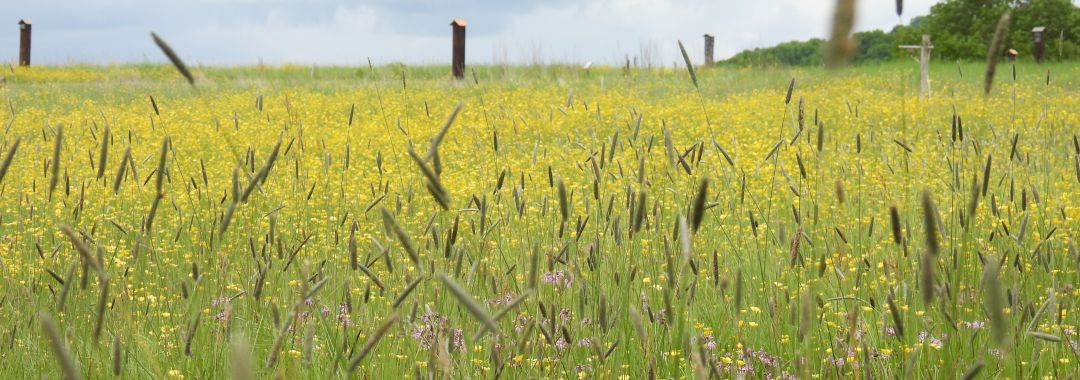
There are three areas of wildflower meadow at Sun Rising, created in a different ways and now at various stages of development.
The first half acre was created in 2008, between the south car park and the Roundhouse. The second acre and a half is the area between the Roundhouse and the pond, which was sown in 2017. The far end of this is damper, nearer the pond, allowing us to create more of a wetland area. The final area is in front of the Longhouse stretching to the western boundary, which is being developed gently over the years using our own green hay.
Much of what is grassland at the moment will eventually become woodland. However, the original grassland is also being retained in meadow areas that will become grassy rides.
At the 2021 AGM gathering for The Friends of Sun Rising, Emma gave a presentation on these areas, which can be seen here.
Gallery: All photos taken at Sun Rising.
Click on an image to zoom.
Pond
Back in 2010, the first area of pond was created, in the low lying south-west corner of the nature reserve. We designed it as kidney-shaped, around 20m at its widest, and it was dug with the extraordinary skills of Brian Ascott, himself now laid to rest within the natural burial ground. The depth at the centre was 3m, which means that still, after many years and some silting, it retains water even during long periods of drought, which is a blessing to the wild animals and invertebrates that depend on it.
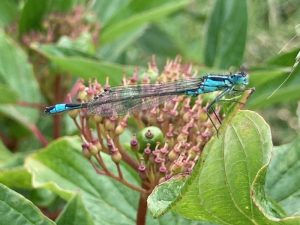
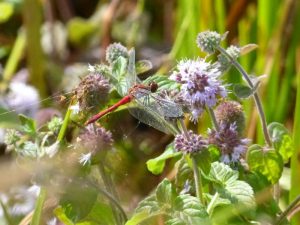
Instead of planting up the pond, or bringing any wildlife in, we took the decision to let it develop naturally. Sure enough, before long, reeds, rushes and pondweed arrived, then the sedges and irises. Water mint and marsh marigolds also came by themselves, but we have now added further plants, such as meadowsweet, cuckooflower, purple loosestrife and more. The smooth and great crested newts, toads and dragonflies, damselflies and many other water creatures have found the pond over the years, bringing so much that in turn brings the birds and bats.
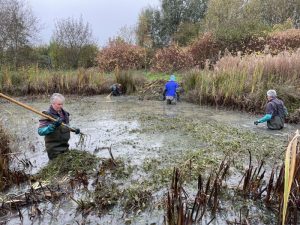
Each autumn, the pond is now cleared of a great deal of reeds, rushes and self-seeded willows by staff and valiant volunteers. If we didn't, the pond would quickly disappear!
In 2025, with some much appreciated crowd-funding, the pond was extended, creating a new loop of deep water which left an island in the middle. This is the most the pond habitat has been disturbed since it was made, which was hard to witness. However, upheaval creates opportunities, and over the coming few years we will be planting and sowing, monitoring how the area recovers and develops. Watch this space!