Local Landscape
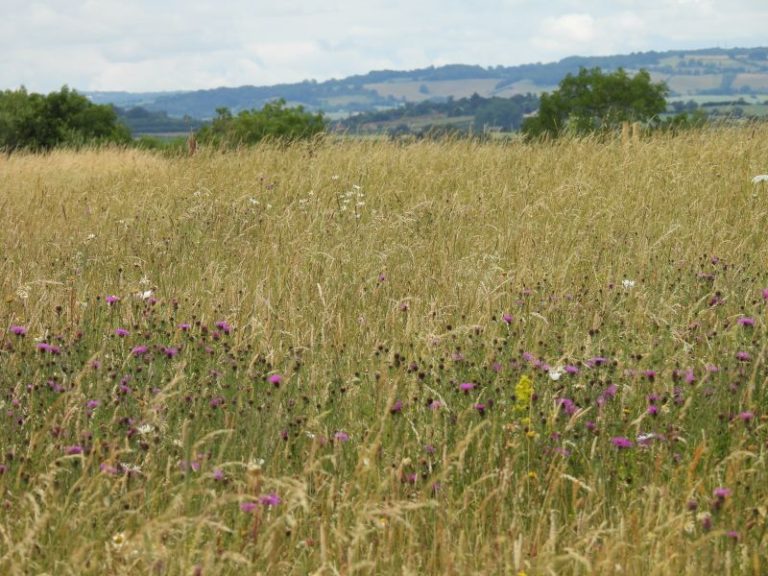
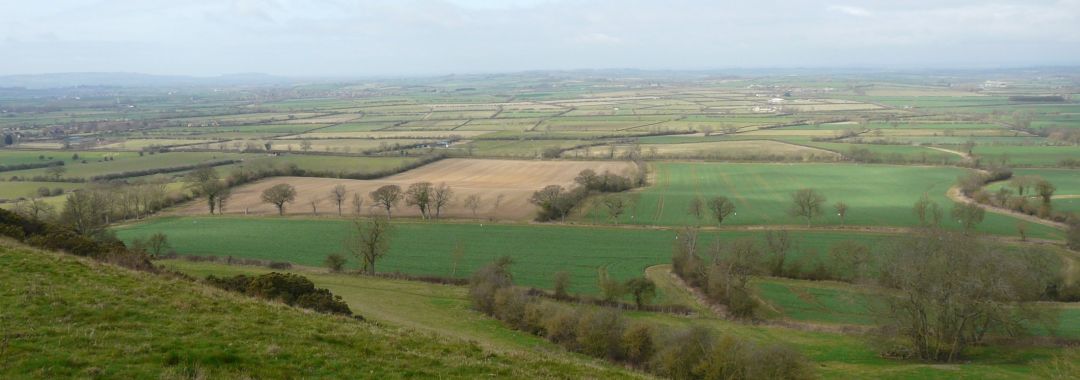
Sun Rising is situated right on the border of the Cotswold conservation area, the Area of Outstanding Natural Beauty (AONB), with the limestone escarpment of the Edge Hills immediately to the east and the rural landscape of the Feldon to the west, stretching over to Meon and Ilmington Hills. This is beautiful south Warwickshire countryside, with villages and farms, small holdings and large private and National Trust properties. It really is the heart of England.
The Feldon is a landscape that has been in agriculture for thousands of years. Crossed by many small rivers and streams, making their way towards the Avon, and with small copses and areas of woodland, there is a calm here that talks of its ancient history. Sun Rising is situated within what was once known as Lower Tysoe Field, where the old strip farming can still be seen, where sheep graze on pastures of ridge-and-furrow.
Connections and Corridors
When searching for a location for Sun Rising back in 2005, we were looking for a field that was large enough for a nature reserve to be viable, even if surrounded by fairly intensively farmed land. In other words, it could support a good number of species even if it remained isolated in the surrounding landscape.
Back at the turn of the century, the importance of connectivity was understood: similar habitats need to be connected through large areas, whether through well managed hedgerows, wide field margins, rivers or even gardens, in order that wildlife can travel, finding food, breeding partners, shelter and so on. These corridors are what make wild populations healthy and sustainable. Yet, conservationists have always struggled to get governments, councils, farmers and other landowners to support this in practice. It's still hard, but at last there is talk about these crucial issues.
At Sun Rising, we are working with local conservation groups such as Tysoe Wildlife Group and their Making Space for Nature initiative. We are also involved with the Local Nature Recovery Strategy, Swan for Wildlife, Butterfly Conservation, the Banbury Ornithological Society, the Stour Valley Wildlife Action Group, and other organisations with local projects underway.
We hope this will help encourage landowners to co-operate in the creation and maintenance of corridors for wildlife, allowing birds, moths, butterflies, and other invertebrates, even hedgehogs, to travel more widely around the local landscape.