Climate Change
For any project focussed on protecting and nurturing nature, the issue of climate change is always present. What the climate will be in this part of the country in ten, twenty, fifty years time, nobody knows – it could be warmer or cooler. The one thing we can be fairly sure of is that it will be (a) wetter, (b) drier and (c) windier. As we care for Sun Rising now, and consider plans for its development, it is important that we bear in mind those key elements and wherever possible include ways of mitigating for all three.
Trees: We are monitoring how our native trees manage both periods of drought and periods when the soil is saturated. Accordingly, we are careful to plant species that are appropriate to areas that tend to be wetter (low ground) or drier (high ground). We are seeing more mildews and rusts on our trees, and we are looking at natural ways to help young trees cope with these problems; more mature trees are better able to manage unaided, adapting to changing conditions.
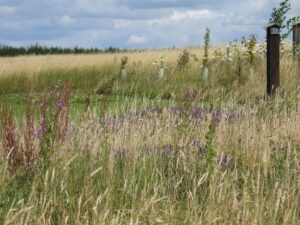
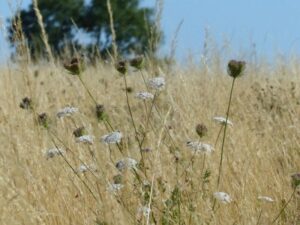
Cold: Retaining areas of long grass and tussock vegetation through the winter provides shelter for small mammals, birds and insects, giving protection through long cool springs as well. These natural areas also retain more sources of food during cold periods at the beginning and end of the growing season. Sheds, hibernacula, log piles, stumperies and compost heaps also offer creatures warmer places to hibernate or rest.
Rain: When our clayey soil is saturated for months on end, the countless tiny organisms that live in the earth can drown, the soil structure then breaking down, baking hard and cracking when dry. Installing drainage pipes across the grounds helps keep the water moving and the soil healthy for trees and plants. Many of our drain lines are temporary: while the trees at Sun Rising are young, the water is allowed to move on, but as trees grow their roots will increasingly take up the water, making the drain lines redundant.
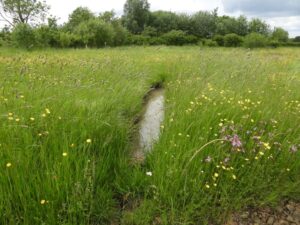
As well as underground drains, we have carefully located grips and ditches. We are creating habitat that benefits from the extra water, such as the pond meadow and temporary pools.
Drought and Heat: A healthy clay soil retains water better than most other soil types, so we are not quick to water young trees, instead encouraging them to send their roots down to find the moisture that’s there. Through periods of drought, however, the youngest trees do need to be watered. We aim to be independent (off-grid) with regards to water, collecting in our large water tanks. We also ensure that young trees are mulched in late winter, this ring of composted bark helping to retain moisture in the soil through hot dry summers.
Wind: While very young trees do need protection from wind, it is also important that trees grow to be flexible at their roots, moving with the winds. Only then can a tree bend instead of break or uproot in a storm. So while it is hard to watch trees thrash about in the wind, we are aiming to help them develop the strength they need to cope.
Wind can also be problematic during hot summers: ensuring there are few areas where the earth is bare helps to stop soil erosion. Trees and hedgerows are valuable windbreaks, and at Sun Rising we have planted and continue to plan the planting of trees to provide the nature reserve with areas that are protected from the wind – not just for human visitors, but for birds, moths, butterflies and other invertebrates.
Getting Involved: If you have ideas or experience to share, we’d be very happy to hear from you. If you’d like to become a volunteer at Sun Rising, get in touch; there are regular days and seasonal tasks for which volunteers are always appreciated.
There are countless ways that we can each make a difference in terms of our individual choices and actions. For ideas on how to ensure your funeral is as environmentally-responsible as possible, check our Sustainability Choices chart.