There is a small non-descript bird that visits the UK every spring to breed. It is the Willow Warbler and, despite the name, it is widespread across a variety of habitats with trees. It closely resembles a Chiffchaff and it’s difficult to tell the two apart: the difference is in leg colour (Chiffchaff black, Willow Warbler light brown). That’s if they stay still for long enough for you to see. The easiest way to tell them apart is actually by the song. The Chiffchaff calls its name over and over and the Willow Warbler sings a descending phrase ending in a flourish. We have heard both at Sun Rising for many years but in 2024 sadly no Willow Warbler. It would appear that climate change may be affecting these birds – they are declining in England and Wales, but increasing in Scotland and Northern Ireland. This has led to the bird being on the Amber list of Conservation Status.
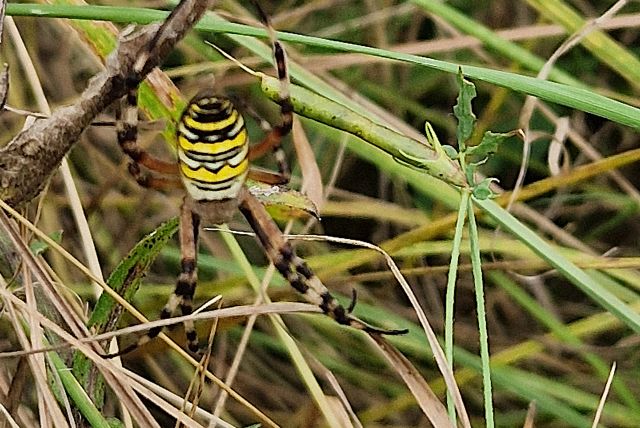
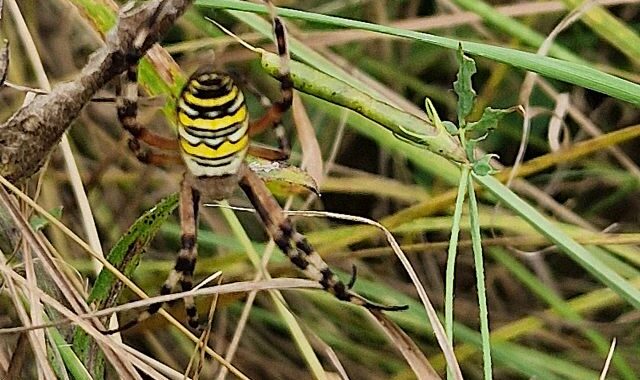
Wasp Spider
On the other hand, the climate warming has brought the arrival of new species, and in late August two new species were added to our records. The female Wasp Spider is a striking (but harmless) minibeast with yellow and black stripes mimicking a wasp, a defence against predation. They are orb-weavers, like our familiar garden spider, and we found one in the long grass around the Roundhouse. They have found their way to the UK from the Mediterranean area and are now not uncommon in southern England. Spreading north, they have now reached South Warwickshire.
The Jersey Tiger moth has a similar story. Concentrated in southern counties, we were pleased to get one in our moth trap at an evening event. It is another striking creature and it treated us to a display of its colourful orange hindwings. The caterpillars like to feed on nettles and dandelions so a wild and weedy patch in your garden might help them head your way too.