The Greening

After a long winter of bare trees and grey hedgerows, the greening of our landscape each spring is immeasurably important.  To me, it feels both inevitable and incredible.  Still tired from the winter, I stand bewildered and amazed, but most of all brimming with gratitude, gazing at the young trees as they come into leaf.

Path Mown along the Eastern Hedgerow

Path Mown along the Eastern Hedgerow

At Sun Rising this year, it is the hawthorn and bird cherry, then the silver birch and wild rose, that have come into leaf first, bringing a breath-taking vibrancy to the woodland areas.  The olive green of the wayfaring tree and red tinges of the guelder rose bring additional colours.  The leaf buds of the hazel, wild service and field maple are just starting to unfurl.  

And beneath the trees, and through the meadows, the grass is now growing.  The first paths are now in place that will be mown through the coming months.  Dandelions are scattered along the pathways, bringing a rich greeny-yellow beside the sunshine of the cowslips.  And of the many different types of grass, the first is coming into flower: the meadow foxtails, so aptly named.

Though the winds can still be cold, and we do still desperately need more rain, spring is now very much with us.  You can almost believe again in warm soft summer days …
Cowslips a-Buzzing

With warm and sunny days, the early bees can now be seen buzzing around the spring flowers in bloom at Sun Rising.  Up amidst the blackthorn flowers and pussy willow there is the hum of busy bees, and down in the grass, beautiful big queen bees are filling up with energy after a winter’s hibernation.  

The daffodils are past their best now, the primroses a little tatty after the occasional overnight frost, but the cowslips are still emerging.  In a week or so, with some rain and sunshine, the meadow each side of the track to the roundhouse should be bright with their hopeful, little yellow flowers.  And the bees do love them!

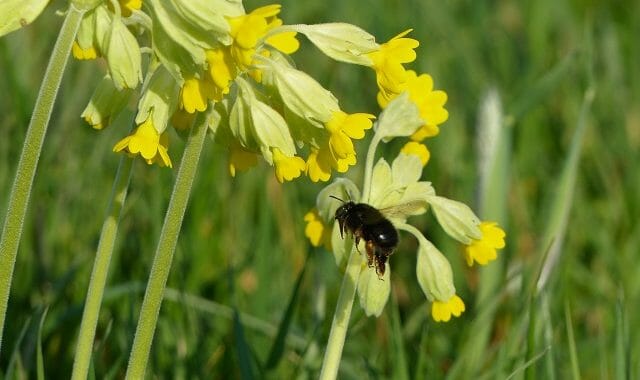
My identification may be wrong (I’ll let you know), but I suspect this may be a female hairy-footed flower bee, Anthophora plumipes.  One of our largest solitary bees, bumblebee-sized but not actually a bumble, these bees are not uncommon at this time of year, in gardens and other flower-rich areas.

Cowslips and Hairyfooted Flower Bee

Cowslips and Hairyfooted Flower Bee

Do note, we have a talk on bees by entomologist and author Steven Falk, on Saturday 14 September this year.  Check our Events page, and let us know if  you’d like to come along.

The Blossoming of Trees

The sunshine-yellow of spring flowers is now scattered across the meadow and in the young woodland at Sun Rising – the native ‘lent lily’ daffodils, cowslips, lesser celandine, primroses, and the first dandelion or two.  Big bumblebees and little honeybees are busy exploring, confirming that spring is now truly underway.  

Looking up from ground level, however, we’re now starting to see the first trees coming into blossom.  For a few weeks now, there have been the occasional little white stars of blackthorn flowers in the hedgerow, but now whole trees and sections along the boundary hedge are bright with the blossom and wonderfully humming with insect life.  With field margin hedgerows cut so hard each year by farmers and landowners, we are glad to have areas of blackthorn at Sun Rising that we can leave, allowing the flowers to develop and blossom.  They are such an important early source of food.  Even more delightful, perhaps, are the few blackthorns planted as memorial trees, the older ones of which also now also in flower.  I do hope the families are able to see them.  

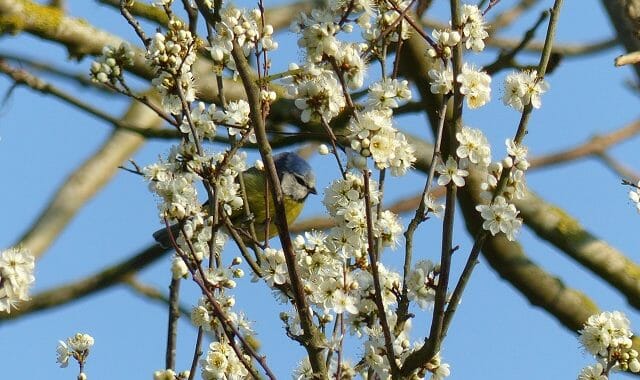
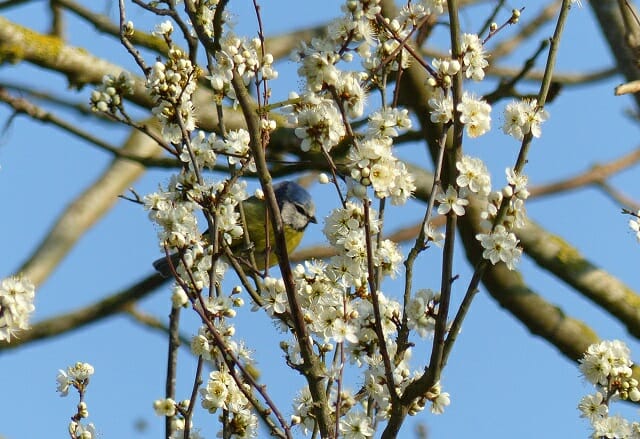
Blue Tit in Blackthorn Blossom

Blue Tit in Blackthorn Blossom

As well as blackthorn, the first of the wild cherry trees are also coming into blossom here.  With slightly larger flowers, they are stately, elegant trees compared with the wild strength of the blackthorn.  Having spent some time taking photographs yesterday, I couldn’t decide what to post here: the first wild cherry or the blackthorn.  Then I found this one, above: I’d spent a while watching the blue tits in amongst the flowers, picking off the tiny little insects that are making the most of the sweet nectar.  I wasn’t sure I’d captured any on camera.  With plumage colours heightened for spring’s season of courting, this little one was hippety-hopping through the blossom, snacking and chit-chatting with a couple of companions.  Just beautiful.  

Mulching

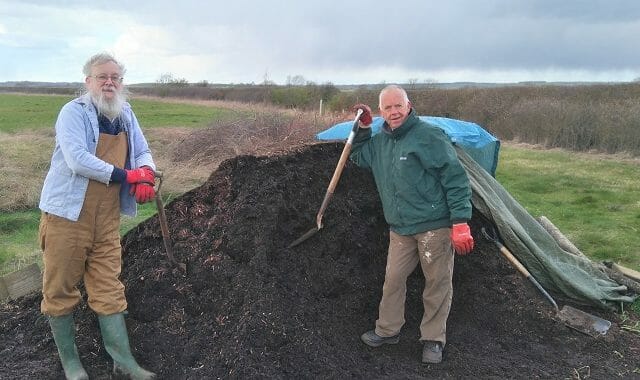
With the excellent and hugely appreciated hard work of some 25 volunteers, on Sunday some 700 little trees were given their springtime mulching.  In gusts of wild wind, with moments of sleet and hail, as well as very welcome sunshine, large bags of composted bark were brought down from the top car park to where small teams were making perfect ‘doughnuts’ around each tree.  

Composted Bark Heap with Volunteers Hard at Work!

Composted Bark Heap with Volunteers Hard at Work!

The bark has two key functions: it helps to retain moisture in the soil around the tree roots, which is especially important during periods of drought and drying wind, and it helps to suppress the growth of grasses and other plants that would compete with the little tree.  You can see a photo of a mulched tree on our Memorials page.

We only mulch the younger trees.  Once a tree is old enough, there’s not much competing vegetation, and its roots are much deeper down in the soil.

Saplings with their Composted Bark 'Doughnuts' at Sun Rising Natural Burial Ground and Nature Reserve

Saplings with their Composted Bark ‘Doughnuts’

In the process of mulching, some little bulbs and other plants have been covered up – but don’t worry, they’ll find their way up into the light again.  f you have any queries about the mulching, do ask. 

The First Leaves

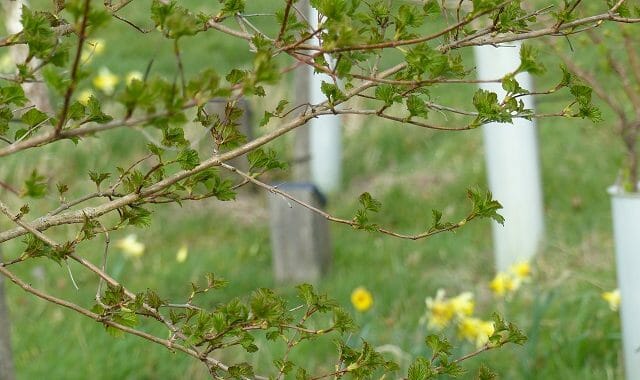
The first of the spring’s new leaves are beginning to show here at Sun Rising.  With periods of unseasonal warmth this year, spring has started early, daffodils and cowslips flowering a few weeks earlier than we would otherwise expect.  Such indications of climate change can be unsettling, but the heart is still lifted by the bright soft greens of the first trees coming into leaf.  Unusually, the guelder rose is one of the first this year – Viburnum opulus.  The one you see here, with the wild English daffodils (Narcissus pseudonarcissus) and wild primrose (Primula vulgaris) in the background, is an eight year old memorial tree in Peter’s Wood.

Spring Leaves of the Guelder Rose

Spring Leaves of the Guelder Rose

The bird cherries (Prunus padus) are starting to leaf too, as are the first of the hazels (Corylus avellana), with dog rose and honeysuckle leaf buds about to break.

The winds have been ferocious, but most of the trees are doing well.  In many ways the winds test the young saplings, giving them the flexibility to cope with storms as they grow and mature. 

Snowdrops and Snow

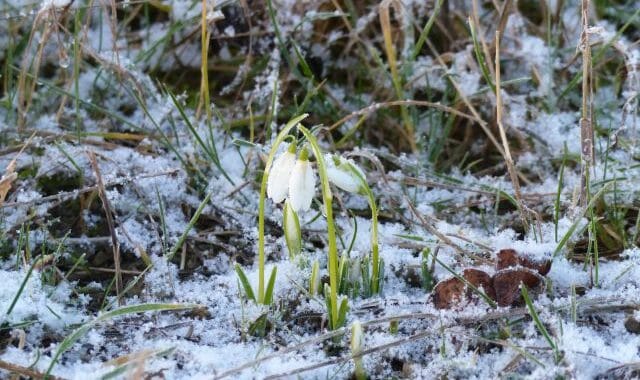
On top of the damp cold, it is the very many tones and hues of grey that are such a wearying aspect of an English winter.  Really, our language should have a dozen words for grey (what about flark, for that heavy grey that looks like rain but isn’t?) …  Being better able to describe its colour may not help us move through it, but catching sight of the first signs of spring certainly does.  Snowdrops are now appearing at Sun Rising.  Little clumps and scattered solitaries, they are coming up on graves, new and old, and in the tatty winter grass.

First Snowdrops of the Year at Sun Rising Natural Burial Ground and Nature Reserve

First Snowdrops of the Year at Sun Rising

Not only are they breaking through cold, if not frozen soil, but our heavy clay is not their preferred ecosystem.  This makes it doubly wonderful to see their quiet white petal heads, not quite opening.

With heavy frost and flurries of snow, last week and this week, some are hidden beneath the white.  Those that come through seem to glow with life, inspiring us to remember that spring is on its way, and colour will return to the landscape once again.

Do be careful in the snow and ice.  We limit the amount of salt we use at Sun Rising – it is so toxic.  Watch for ice underfoot, and for snowdrops too.

Figure of Eight and Other Amazing Numbers

Our last moth survey for 2018 took place on 20 October, our lovely nocturnal moth-ers staying up half the night trapping, recording and releasing the late season flyers, between cups of hot tea.  With many thanks to Alan Prior and his team, we now have the figures for the year.

Over 13 000 moths have been counted at Sun Rising since Alan began surveying in 2014.  And of those many thousands, there are 473 different species, from the tiny little grass moths to the great big hawkmoths.  Even with such great numbers, though, the news isn’t easy: generally moth numbers are still reducing around the country.  On 20 October, the Figure of Eight was found, an increasingly rare autumn moth, which gives hope that Sun Rising is offering a haven for creatures that are struggling elsewhere.

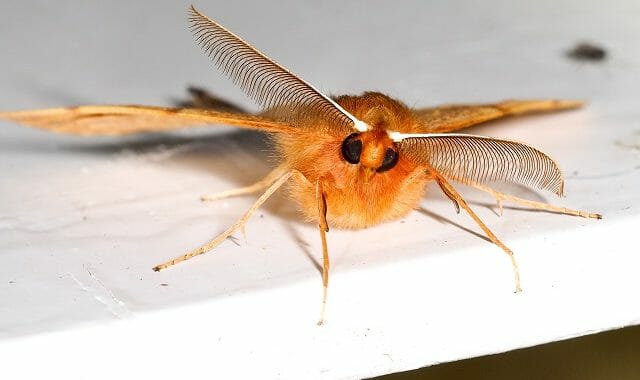
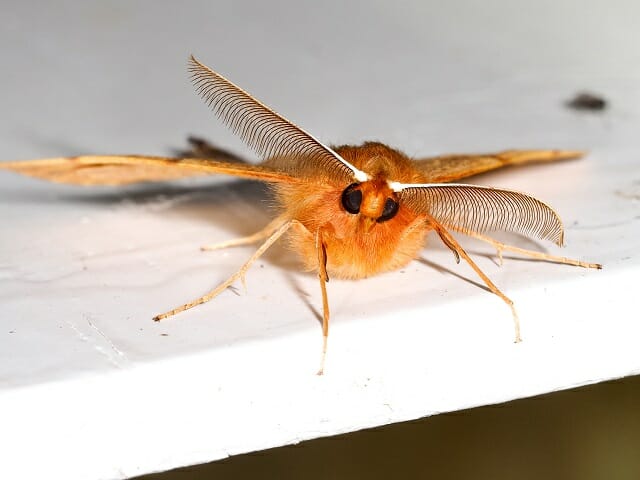
I know some don’t much like moths – they flutter around in the darkness, seemingly clumsily.  But up close they are an absolute delight.  Who wouldn’t fall for a furry little orange fellow like this, the feathered thorn, photographed at Sun Rising last year … ?

The Feathered Thorn Moth, photographed at Sun Rising (Alan Prior)

The Feathered Thorn Moth, photographed at Sun Rising (Alan Prior)

Autumn Colour

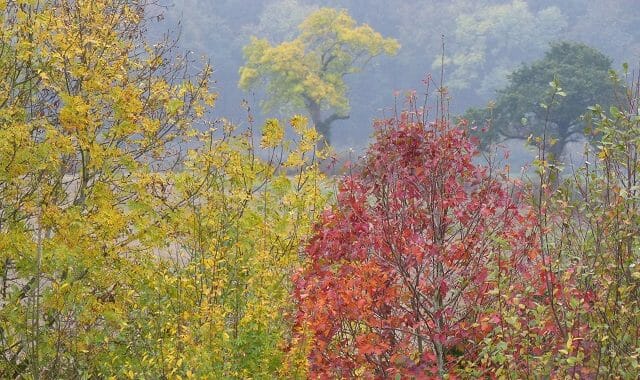
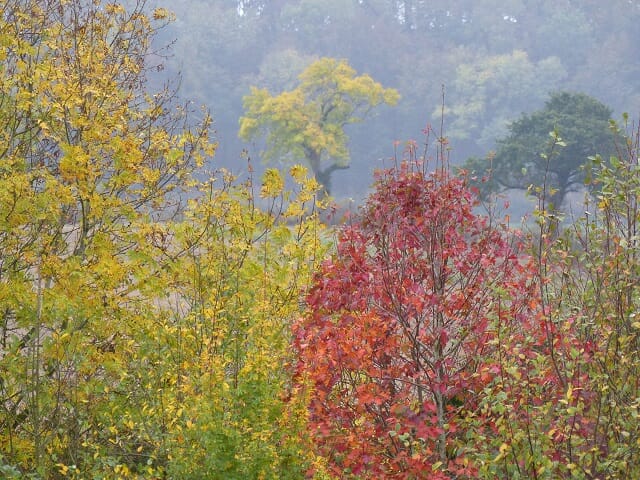
The most beautiful trees and shrubs at Sun Rising at the moment are the wild service tree and the guelder rose.  Both have leaves that quickly transformed from green to the richest burgundy reds.  Yet, without the background of pale yellow birch, the golden maple, the soft olive oak, these glorious wine colours wouldn’t be so amazing.

Autumn Colours

Autumn Colours

This view is taken from the roundhouse, looking over Liliana’s Wood towards Sun Rising Hill.  The next period of high winds will take the last of the leaves, so if you have a chance to pop over soon, please do.

Muddy Work

If a wildlife pond is to remain a pond, once a year it is necessary to take out a good deal of the vegetation, not only from the pond itself but from the inflow channels as well.  If we don’t, within just a couple of years, the pond would become a marshy area with no clear water, and soon after that it would become so clogged with plants it would start to dry out completely.

Wildlife ponds are a crucial part of a healthy ecosystem.  During this long summer of drought, the pond at Sun Rising was one of very few in the local landscape that retained any water.  The level dropped by some six feet, but the remaining 3 – 4 foot of water was a lifesaver to vast numbers of visiting wildlife.  You could see from the footprints at the water’s edge just how many birds and mammals were coming to drink, let alone the bees, bats and other creatures.

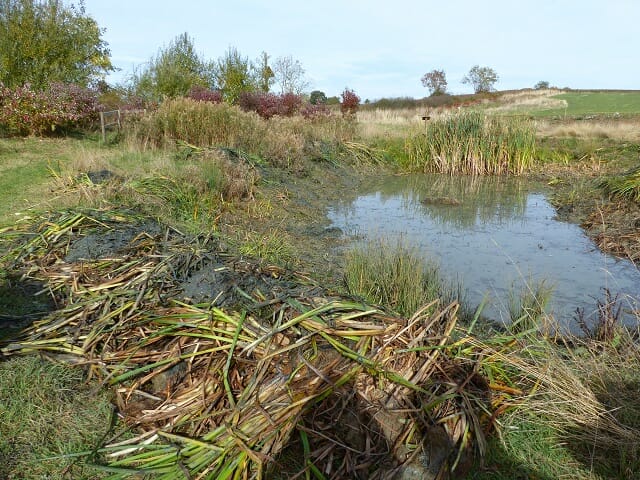
Yesterday, however, was the clearing day.  Here’s a photos taken after the bulrushes, bur reed, pondweed and other vegetation was cut back.  You can imagine what a muddy job it was, and we thank the three wonderful volunteers who came to help out: well done!  This cut vegetation will remain on the pond’s edge for a few days, allowing little creatures who were pulled out with it to creep, crawl and slither back into the water.  We’ll then clear it, putting it the compost heap behind the pond bank.

The Wildlife Pond just after the vegetation was cut

The Wildlife Pond just after the vegetation was cut

Check our Instagram page for more pictures, including one of the very muddy lads who helped … https://www.instagram.com/sunrisingnaturalburial/.  Click on the photo there and you can swipe through more pictures.  You may like follow us on Instagram while you’re at it!

Feeding the Horses (and Donkeys)

As mentioned in the previous blog, hay cut and baled in the summer is usually used for winter fodder for farm livestock.  At Sun Rising, our hay is taken to the local horse rescue centre, Redwings at Oxhill.  This feels very much in keeping with our ethics.

Cut late in the season, it’s rich with wildflower seedheads, and so much better for animals than hay made solely with grasses.  Where it’s a bit too chewy for the horses at Redwings, we’re told, the donkeys are more than happy to polish it off.

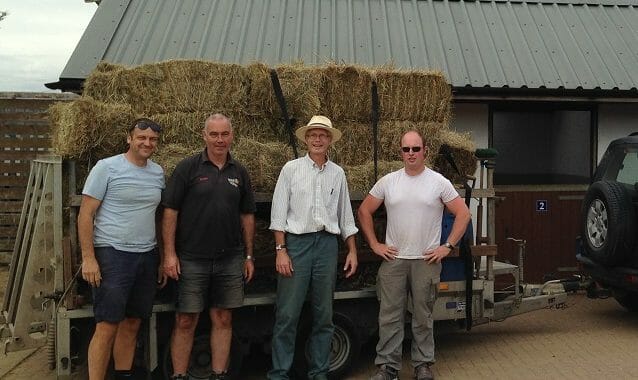
With another year’s haymaking over, we’d like to give a big thank you to Michael who has kindly cut the hay for the last few years, using his wonderful old tractor (with Ben, the dog).  And thanks to Chris and Jamie, our gravediggers, who helped take the hay up to Redwings.  As we donate the hay, instead of selling it, these kind folk have equally given their time without charging.  Thanks too to Tom, Helen, and all at Redwings for their valuable work.

Jamie, Tom, David and Chris, with our Bales at Redwings

Jamie, Tom, David and Chris, with our Bales at Redwings