At Sun Rising, almost since we first opened in 2006, we have had a variety of bird feeders around the grounds. These have been generously sponsored over the years, both in terms of the feeders and the seed. They have been vital to support and grow our bird populations as the nature reserve developed. However, now, in the spring of 2026, we have decided to stop providing birdfood and here are some of the reasons.
Disease: It is actually unnatural for large numbers of birds to gather and feed in one place for a prolonged time. Places where this happens are hotspots for disease. Trichomonosis is a fatal disease, passed between birds in their saliva. It affects finches in particular, with recent British Trust for Ornithology data suggesting that Greenfinches have declined by 50% since the disease emerged 20 years ago. Other sources put the number at 66%. Chaffinches have also worryingly reduced in number. Salmonellosis is another problem, transmitted through rotting food and droppings, killing finches, sparrows and other birds, especially through the winter. Further, while we might think of avian flu only occurring in domestic hens or water fowl like ducks and geese, it can spread to all wild birds, and instances are still high. While we were regularly cleaning and disinfecting our feeders, encouraging sites of intensive feeding maintains the risk.
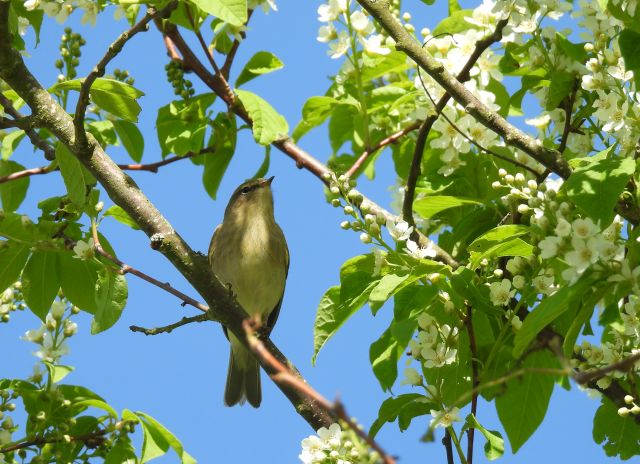
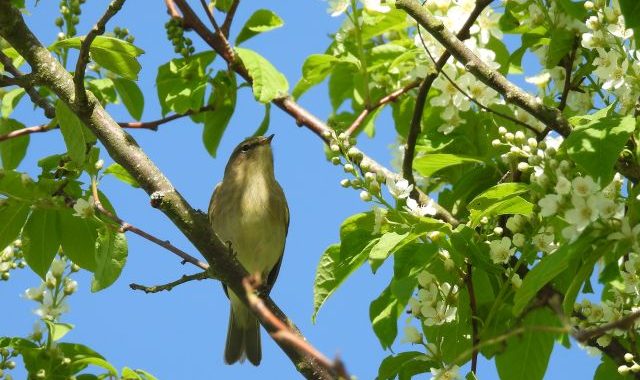
Chiffchaff in a blossoming Bird Cherry (- chiffchaffs don’t use birdfeeders)
Sustainability: Birdfeeding is big business – estimated at worth £380 million a year in the UK alone (2023), where millions of households feed their garden birds. All these foods need to be grown somewhere, requiring water, energy, fertilisers, pesticides and so on, then to be harvested, transported and packaged. It is possible to source sustainably-grown and organic products, but foods like peanuts have to be grown overseas, often in monocultures where native species struggle to survive.
Biodiverse Bird Populations: There is no doubt that feeding birds benefits some species, such as Blue Tits and House Sparrows. This sounds great, but it is thought that, by artificially boosting survival of these species through winter months, when spring arrives there is increased pressure on natural food resources and nesting opportunities. Furthermore, only some species use birdfeeders. For example, the shy Willow Tit is the UK’s fastest declining resident bird, with a 96% reduction in the last half decade. Like Blue Tits, they nest in tree holes but, not bolstered by birdfeeders, they are out-competed due to sheer weight of numbers. Migrants like Spotted Flycatchers arrive with us late in mid May, only to struggle to find suitable nest holes which are already occupied by feeder-using species like Great Tits and Blue Tits.
Great Spotted Woodpeckers (which readily come to feeders) have increased by nearly 400% in the last half decade, whilst in the same period the Lesser Spotted has declined by 83% (which don’t use feeders).
Supporting the Birds: At Sun Rising, in the past, we have taken down our feeders in April when natural food is once again abundant. This year we will not put them back up in the autumn. Instead, we’ll be carefully monitoring the effect this has. As a nature reserve, we should be (and are) providing natural sources for birds to forage seeds, berries and insects, particularly by leaving uncut margins, planting trees and increasing nectar-rich wildflower meadows.
Please don’t imagine that we are advising against feeding birds in your garden. However, you might consider withdrawing food temporarily if you see any sick birds. And do be extra careful to clean feeders and bird baths, regularly and thoroughly. It helps too to make environmentally-kind decisions when choosing what foods to buy. And finally, remember there is a huge benefit to all the birds if you choose to grow plants in your garden that produce plenty of seeds and attract insects; in this way, you can provide a source of natural bird food, at no extra cost!