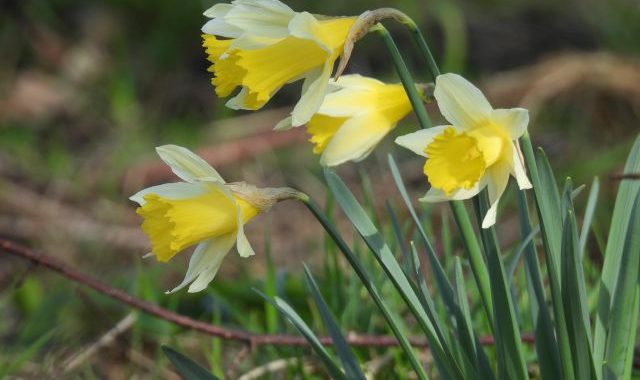
In the last week, it certainly has felt as if spring is truly here. There’s a light freshness in the air and, while the snowdrops are past their very best, the daffodils are glowing with sunshine, even when the skies are cloudy. In the coming days, however, we’re heading back towards frosty nights and much lower temperatures.
The start of spring differs according to which measure you use. Meteorology, the study of weather, tells us it is 1 March. Astronomy, the study of celestial objects, would say the vernal equinox, which this year is 20 March, when the tilt of our planet gives a day and night of equal length.
But have you heard of Phenology? From the same etymological route as ‘phenomenon’, this is the study of nature’s cycles. It’s a science that is becoming more important year by year. With climate change, understanding when and how ecological processes happen is critical for agriculture, forestry and biosecurity, which have ramifications across the world.

The Wild Native English Daffodil (Narcissus pseudonarcissus) at Sun Rising
At Sun Rising, we have thousands of ecological records from many years. They may not have global significance, but they are part of the broader statistics. The ‘first for the year’ sightings are always interesting. This year, the first flowering snowdrop was seen on 22 January. The first butterfly was on 4 March, a butter-yellow male brimstone. The first summer migrant last year was the chiffchaff, on 18 March; we’ve heard them in local meadows but not yet at Sun Rising.
The science of phenology is close to 300 years old. Robert Marsham began recording the first events of spring back in 1736, but naturalists have been using their annual sightings as sources of learning for millennia. As an indicator of climate change, observations show spring is a month earlier now than in the 1980s. In fact, we can no longer use some of the old indicator species: for example, wild primroses can now be seen flowering in December, and daffodils cultivated for the garden can be bred to flower at the turn of the year.
Of course, it’s not all about springtime. We also record the first ripe blackberries (31 August 2024) and the arrival of the first winter migrants (the fieldfare on 1 November 2024). You can find out more about Nature’s Calendar and seasonal indicators at: https://naturescalendar.woodlandtrust.org.uk.