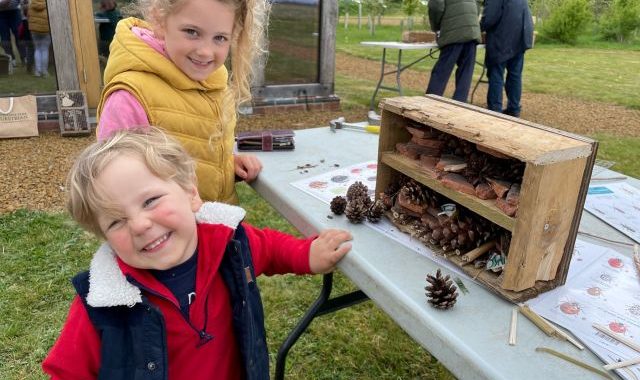
Yesterday morning, a lovely group of adults and children gathered at the Longhouse to create what are generally called insect, bee or bug hotels. Previously, we’d prepared a number of frames out of scrap wood, and yesterday was the time to fill the frames: we had old bamboo canes, young green bamboo canes, the hollow stems of hogweed, teasel and other dried plants from last year, old teasel heads and pine cones, broken flower pots and crockery, some bits of old bark and rotting wood, and chunks of larger wood with holes drilled into them. Some also use straw, sheep’s wool and other materials, indeed anything that will add to the warm, dry, dark space the ‘hotel’ is offering.
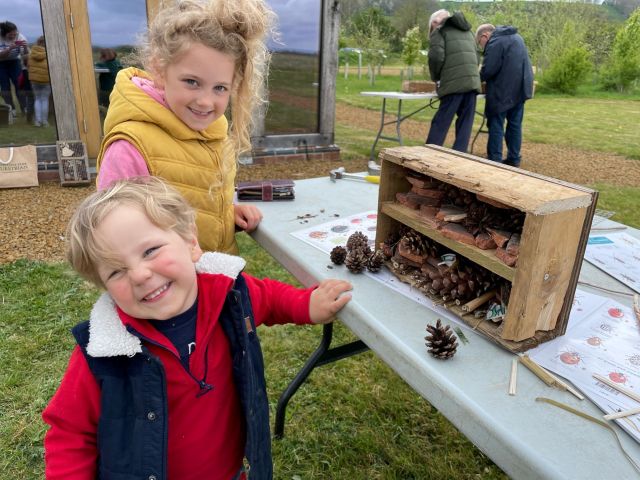
Happy Folk at the Insect Hotel Event, April 2025 (published here with kind parental permission)
Insect hotels are used by a wide range of insects. If placed in a dry, sunny spot, it is more likely to be used by wild solitary bees, for nesting and raising their young. Butterflies may use it as a place to shelter or overwinter. Ladybirds and lacewings will use it for shelter too. If you place it in a darker spot, it is likely to attract beetles, centipedes, spiders and woodlice.
The advantage of these boxes is not just to the insects, but to the nature reserve as well. If we protect our pollinators, they will better play their part in the ecosystem, pollinating the trees and wildflowers, keeping the meadows and woodlands healthy. But all insects have a place in nature: pest predators like ladybirds and lacewings feed on aphids, many beetles eat decaying matter, centipedes eat smaller insects.
It’s far easier to feel terrible about potential extinctions of larger creatures like polar bears, or even hedgehogs, but with bees and other insects we really can do something to help, in our own gardens and of course here at Sun Rising. If you’d like to know more about how to make your own insect hotels, have a look at this link: Build-a-bug-hotel.pdf. Large ones can have some value, but smaller ones are often thought to be better, reducing the risk of shared parasites and moulds. Avoid plastics, as these hold moisture in a way that encourage moulds, give it a solid back and put on a good roof. Hotels also need to be positioned where they will have good sunlight, protection from wind and rain, and secured so it doesn’t shake or sway in the wind. It may also be useful to put it in a cool dry space over the winter to protect any overwintering occupants!