The campaign for No Mow May has generally been amazing. All around the country there are local councils who, over the last few years, have agreed not to mow road verges, banks and roundabouts, leaving areas in parks and cemeteries, through the month of May. Individuals and families have been inspired to leave their own lawns for a month, or allow areas of the garden to stay wild for a while.
To the uninterested eye, a verge or lawn that has been left unmown may simply look messy. But curiosity inspires us to learn. Even if there are no flowers in the grass, there will almost certainly be quite a number of different grass species, species which may look fairly similar when all you see is short green leaves, but which are wonderfully diverse in their flowering and seeding. Each species has adapted to a specific habitat, and has any number of other species that will benefit from it.

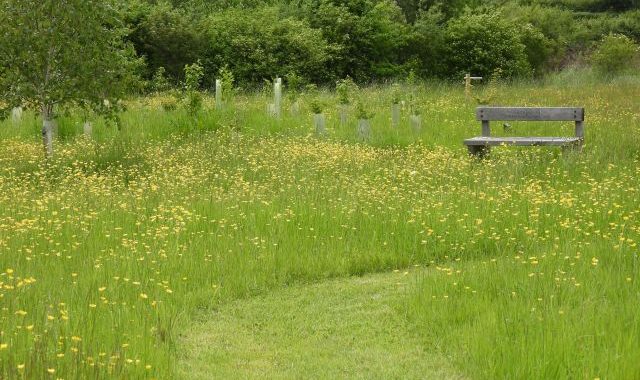
Path through Unmown Meadow
Structure is an important aspect of No Mow May too. Having areas of tall vegetation provide for a wider range of invertebrates. For example, some spiders hunt from the tops of tall grasses, while some prefer half way up, and others like the dark low levels. Taller stands of grasses and flowers offer better shelter in wind and rain, or from sunshine that’s too hot. The ground will stay damper at the base of tall grasses, keeping the soil healthier through periods of early summer drought.
If there are wildflowers in the grass, all the better. They will not only make it prettier to our eyes, they will be hugely valuable to all those creatures who use the sweet energy of nectar and pollinate the area as they go. If you’ve left an area without mowing one year to find there is nothing but grass, why not add wildflowers in the autumn, ready for next May. It isn’t easy but it’s certainly possible with a little guidance and advice.
The great benefit of No Mow May can, however, be destroyed if the area is cut to an inch on the first day of June! In fact, the original campaign is now changing to encourage us to leave areas wilder, unmown, untidy, for most of the summer. It isn’t just about May: why not leave the vegetation until it’s gone to seed in July or August?
Of course, at Sun Rising we have huge areas of meadow which are not mown from March to September, and areas that we mow throughout. An excellent way of making sure a wild area looks purposeful and cared for is to mow a verge on the edge: that’s what we do at Sun Rising. Or a path mown through it will give access, allowing a way of exploring what’s in the middle of the wild patch, learning more and enjoying more. A mown area beside or through taller vegetation is also another kind of habitat, so you can keep the common daisies, dandelions and speedwells that prefer the shorter grass.