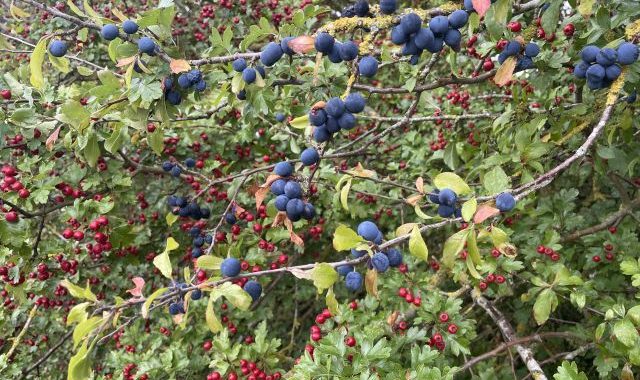
Over the last few weeks, Sun Rising has transformed into autumn. The air has cooled, the ground bathed in morning dew, the leaves so many bright jewel colours now falling to the woodland floor. Mists have begun to roll in as the northern hemisphere of this beautiful planet prepares for its winter sleep. As the season has turned from warm and dry to chilly and damp, an abundance of berries, seeds and nuts have appeared in the hedgerows and trees. Indeed, the Woodland Trust has confirmed that 2025 is what is known as a ‘Mast Year’, an event that seems to occur roughly every five years, the last being in 2020.
Folklore declares that a bumper crop of nuts, seeds and berries means a cold winter is on the way. However, this isn’t the case: nature doesn’t predict the future. Mast years are one way in which a tree ensures its species’ survival. When a tree produces a large crop of nuts, the animals that eat them such as jays, badgers, mice and squirrels, can’t eat them all, so more are likely to germinate and become new saplings the following year. The fruits eaten, of course, provide plentiful seeds, deposited in little packets of fertiliser.
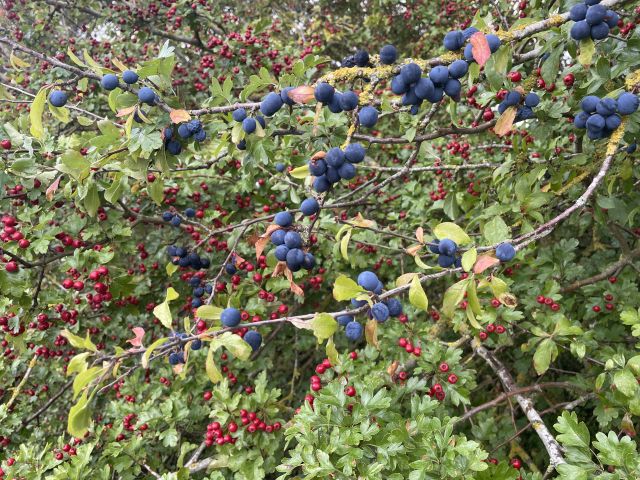
Sloes and Haws in the Hedgerow at Sun Rising
With trees across vast areas having large fruit crops in the same year, in a mast year it can look as if they have synchronised their behaviour. Science is now certain that trees do communicate, using chemical signals within underground fungal networks, through which roots connect with roots, the extent of their communication is still a mystery.
However, a key factor that’s easier to understand is the weather. How much fruit a tree can produce is, in part, based on the weather conditions of its flowering period. This year saw a very warm, dry spring – perfect conditions for flowers to bloom and insects to come out in numbers to pollinate, and as any gardener knows, plenty of pollinated flowers means a good crop of fruit. Yet, producing so many nuts, seeds and fruit takes a lot of energy; they can’t do it every year, which means next autumn there is likely to be considerably less, regardless of what weather comes in the spring.
A mast year doesn’t just provide us humans with the means for extra fruity fruit pies: it can be seen right across ecosystems. The increase in fruit means a significant increase in food for wildlife, particularly small mammals such as the wood mice and field voles that live at Sun Rising. This will give a hearty boost to their populations, with a knock-on effect of also increasing the numbers of their predators, such as kestrels, owls and stoats. With a smaller crop next year, those increases will be kept in check once again.
However a mast year comes about, it showcases the resilience of our trees and woodlands, and why they are so important. Enjoy the sight of the bountiful crops this year, and remember: every acorn, maple seed, hazel nut, rose hip, cherry, privet berry, blackberry, crab apple, sloe and haw will grow the next generation, not only of trees and shrubs, but also of small mammals, birds and insects.