The Little Creatures

As we move through this late summer season, harvest-tide, we continue to cut the long dried grasses and wildflowers that have now gone to seed.  Although the strimming leaves a pale stubble for a few days, after a little rain the areas green up with soft new grasses and another flush of wild flower growth.  It is good to feel the burial ground being tidied up again.  But there are hard aspects to the mowing …

Little Mouse in the Stubble

Little Mouse in the Stubble

The areas of long grass and wildflowers, heavy and falling over now, matting on the earth after heavy August rains, are ecosystems that have developed over the long growing season since March.  They are filled with life!  On our clay soil, many of the plants produce oil-rich seeds, especially valuable to the little creatures like the beautiful little soul in the photograph above.

Although we do our best to ensure the wildlife has plenty of time to move away from the machines, and we leave patches of thick growth where they can shelter, finding new homes, adapting gently as we all face the coming autumn and winter.  That we disturb them at all hurts me, but caring for a nature reserve and burial ground means we must manage the ground, we cannot simply leave it to become wilderness, much as sometimes I feel the desire to do so …

Coffin Bier

When we first thought of buying a coffin bier, it was because some of the larger corporate funeral directors (and a few smaller ones too) now refuse to shoulder coffins in the traditional way.  Citing health and safety, they simply don’t carry, instead wheeling a coffin on a small metal trolley.  Such trolleys may be fine in new urban churches, but out on the bumpy stone tracks and uneven meadow grass of a natural burial ground they are wholly inappropriate.  So we had a bier designed and made.  Isn’t it beautiful …

Sun Rising Coffin Bier

Sun Rising Coffin Bier

On Saturday morning, however, in soft summer rain, we tried it out, and I realised that the value is far far greater.  The bier is so beautifully designed that it is possible for just one (reasonably strong) person to pull it alone, two ordinary folk to move it with ease, or even more wonderfully, for three or four with not much strength at all.  Suddenly it is possible for daughters to carry …

Why a ‘bier’?  It’s from the Old English bær, the same root as bear.  It’s a much more lovely word than cart …

Butterflies

There are more butterflies in the wildflower meadow and grassland this year at Sun Rising than ever before.  This is a combination of weather conditions and the development of the meadow, which is richer in ecological diversity all the time.

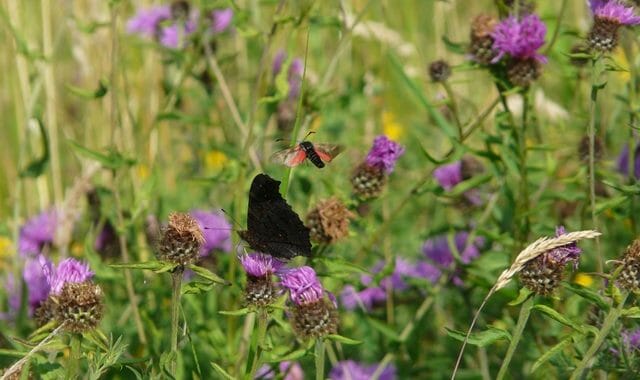
This is a fascinating photograph.  The dark butterfly is the underwing view of a peacock (Inachis io), and the little red moth is the six spot burnet (Zygaena filipendulae).  I watched them for about twenty minutes, the burnet harassing the peacock again and again, landing on its wing tips.

Peacock with 6 Spot Burnet Moth

Peacock with 6 Spot Burnet Moth

Actually, for me, one of the most beautiful elements of the photograph is the drying grass head, lying against the knapweed bud to the right.  It seems to my human mind a moment of quiet gentleness beside the insects’ high drama.

Wild Meadow

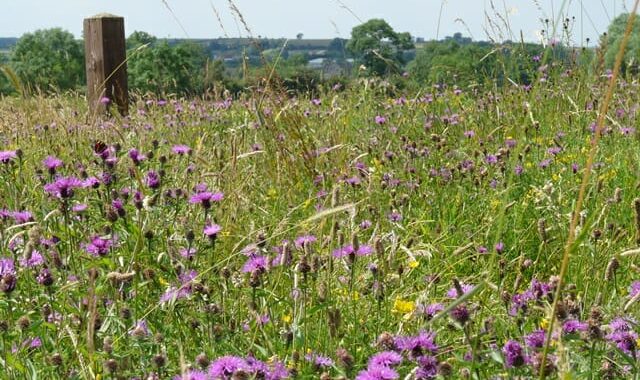
In the earlier months of the summer, nature is such flood of colour, of life, but once we reach July that flood seems to break its bounds.  Suddenly its exhuberance looks wild and uncontrolled.  At Sun Rising, we strive to maintain a balance between the managed areas, that are tidy and accessible, and the untamed extravagance of nature: it is by mid July that I feel nature is laughing at the very idea.  The wildflower meadows are waist high with flowers and grasses, the purples of musk mallow, knapweed, red clover, meadow cranesbill, various thistles and field scabious mixed in with the brilliant yellows of trefoils, rattle and bedstraw, the occasional buttercup reaching through into the light, and the grasses are going to seed, with soft mauve and palest gold.

Looking West

Looking West

And when the wind comes, and bursts of summer rain, the grasses are starting to lie down, and suddenly it feels chaotic.  I sit in the grass, lie back and watch the clouds, listening to the grass hoppers and honey bees, and think of the human condition: the inner chaos of our thoughts and emotions which, like wild storms across a landscape, can leave us feeling totally disordered.  Yet taking a moment just to breathe in the quiet hum of the natural world, to watch the flora and fauna getting on with life in their own way, gradually, slowly, gently, nature guides us to feel how it all fits together again.

Poppies and Roses

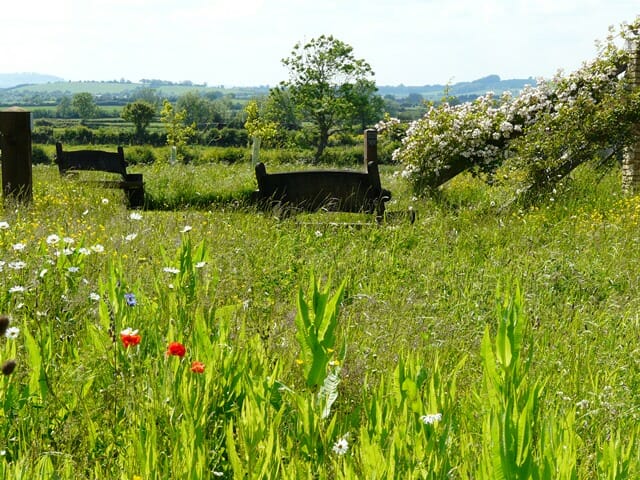
Both of the more mature roses around the roundhouse are now in flower, and the scent on a still day is so wonderful you can’t but pause and breathe it in as deeply as you can.  I love this photo: it shows so beautifully the calm of the place, together with the roses, a few poppies and scabious, young teasels and oxeye daisies, and of course the view towards the hills.  The gentle celebration of life that is an English summer’s day …

Poppies and Roses

Poppies and Roses

Dragonflies

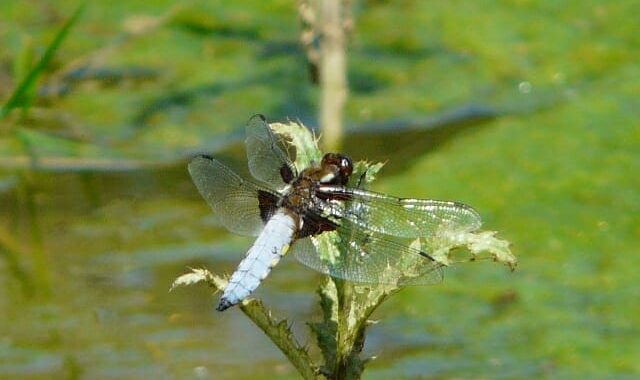
There are now a number of dragonflies at the pond, mating and laying eggs, darting with flashes of energy and colour.

Broadbodied Chaser

Broadbodied Chaser

Ragged Robin

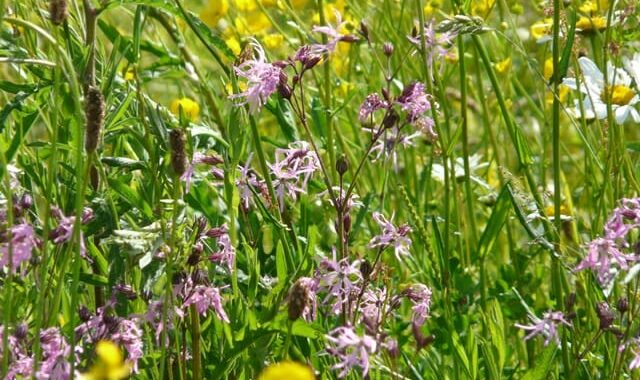
Isn’t ragged robin (Lychnis flos-cuculi) a beautiful creature?  The petals hold sunshine and rain in a way that is quite unlike its neighbours in the wildflower meadows.

ragged robin

When we feel a battered by life, it lifts the heart through nature’s inherent generosity, as if through a natural allegiance it whispers to us that there is still beauty, even in what feels like the soft and shredded imperfection of emotion.

Indeed, now the wildflower meadow is in full bloom, it is wonderful to spend the warm and sunny days sitting on the edge of the meadow.  There is so much to see, every moment inspired by another flower, another glance of light or shadow, another tiny spider or beetle making its way through the jungle of growth, another butterfly or bee landing upon the open petals.

Bubbles

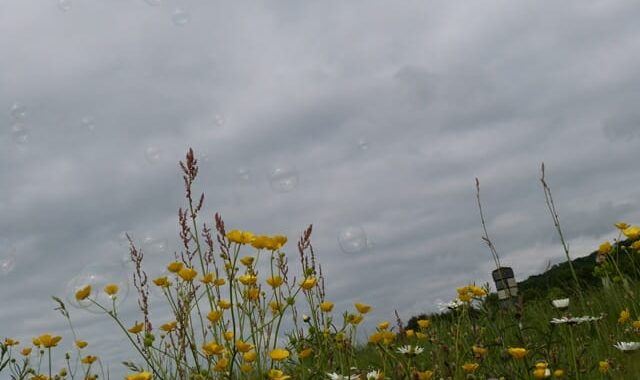
Sometimes I am sent photographs by families who have loved ones buried at Sun Rising, photographs that reach deep into my soul, sometimes with excruciating sadness, sometimes with utter delight, and sometimes a little of both.  Here is one that lifts me to a soul-smile and brings tears to my eyes.

Bubbles for Theo

Bubbles for Theo

Yes, it is taken at a jaunty angle, but have you tried to operate a bubble machine and take a photo at the same time … ?

The dramatic cloudscape has been common over these past few days, and above the meadow of buttercups, oxeye daisies, vetch, ragged robin, campion, red clover, plantains and so much more, the clouds are just glorious.

Rest in peace, little Theo, much loved. And thank you, Anna, for the lovely picture. X

Campion

A dreary summer’s day, with the sort of drizzle that is delicious on sun-warmed skin but chilly in a cool wind, and surreptitiously soaking: it is a day to find and remember the beauty in life.  How about this: red campion (Silene dioica).

Red Campion

Red Campion

Planted on a grave in memory of a fine fellow, much loved, this little plant has its flowers to the sunlight, and though I am anthropomorphising, each seems to me a face with a different expression from mischief to reflection to delight.

Buttercups

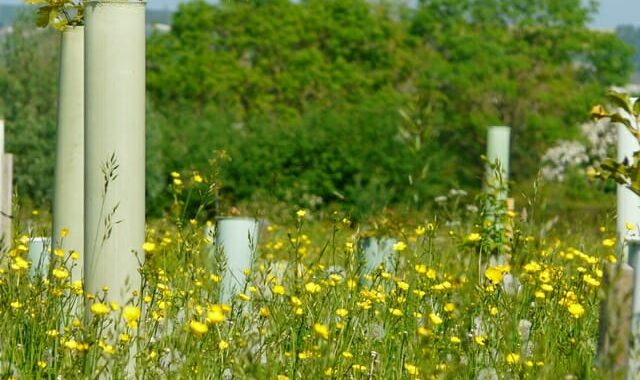
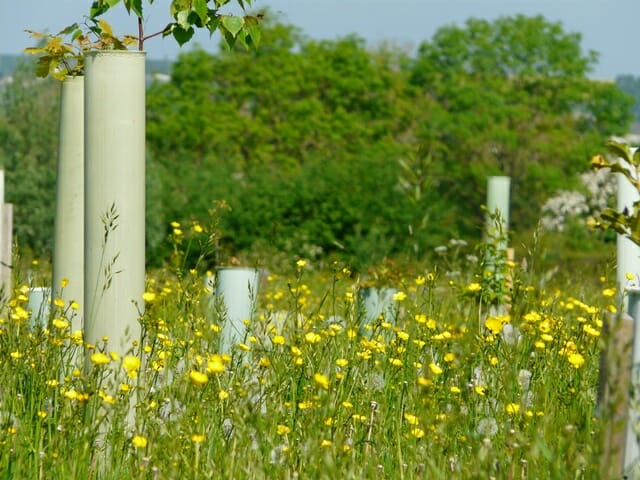
The dandelion clocks are a haze across the wildflower meadow and beneath the saplings at Sun Rising, but the colour is now coming from the buttercups, countless brilliant yellow buttercups, everywhere!

Buttercups beneath memorial saplings

Buttercups beneath memorial saplings

Do you remember the days of childhood, lifting your chin as someone held a buttercup beneath it and informed you how much you loved butter? There is something beautifully strong and reckless about buttercups in such profusion that reminds us of childhood.  Amidst the memories of loss, let us feel the warmth that comes with memories of playful days and wonder.