Beautiful Moths

Another moth survey this week was carried out by moth man Alan Prior, whom we joined in the early hours of the morning as he emptied the traps and counted the little creatures who had made their way to the light traps.  I wanted to show you a photo of this beautiful fellow : a peppered moth (Biston betularia).

Peppered Moth

Peppered Moth

Look at the little stripy legs and the feathered antennae: what an amazing creature.  Some readers may remember it from biology class at school, as peppered moths are a species that showed the process of evolution.  Individuals became increasingly dark during the years of industrialisation and its pollution, until the wholly dark melanistic form (f. carbonaria) became dominant in areas of the north of England.  As our manufacturing industry declines, so the darker form is declining too.

Thank you, Alan, for the survey and the extraordinary photograph.

Green Flag Award

Green Flag Award

We are proud to have been awarded a prestigious Green Flag this year.

Green Flag logoThe Green Flag award scheme was launched in 1996 to recognise and reward the best parks and green spaces in the country. The rigorous Green Flag judging process measures each site against a list of criteria which includes cleanliness, safety, sustainability, heritage conservation and quality of management. It continues to represent the national standard of excellence against which parks and green spaces are measured. For more information about Green Flags, please check their website, or have a look at the Sun Rising page on their website.

There’s a rather nice little piece in one of the local newspapers too : check The Banbury Guardian website to see it online.  Some of the quotes are strangely worded, but you’ll get the idea!

New Photographs

We’ve just uploaded a number of new photographs to our Flickr site – this time in the Pond album and the Butterflies and Bees album.  Do have a look, and share the links with friends and family.

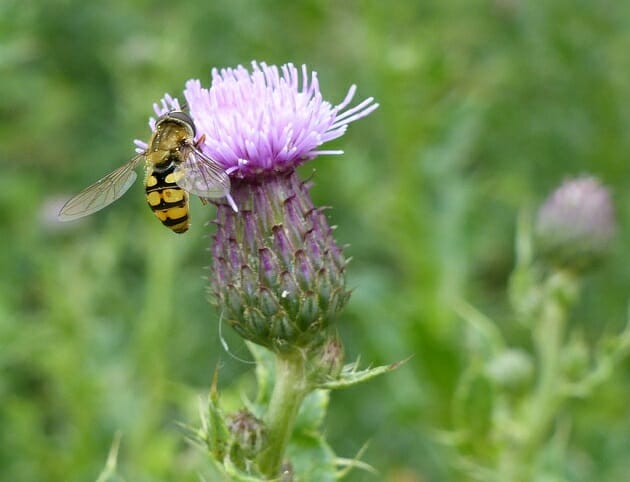
Common Banded Hoverfly on Creeping Thistle Flower

Common Banded Hoverfly on Creeping Thistle Flower

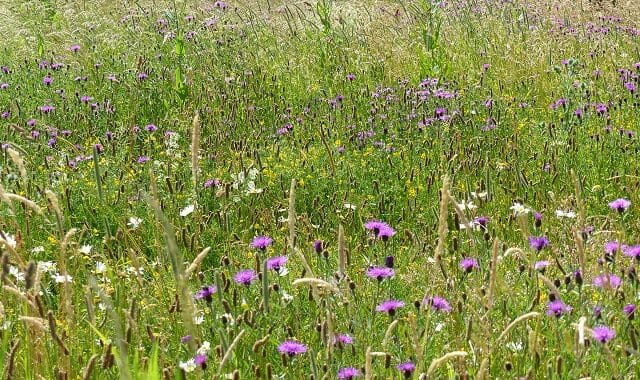
The Meadow

The meadow is humming with life at the moment – hoverflies and bees, and countless other creatures that I can’t identify, not to mention the mice and voles, butterflies and moths.  It is impossible to take a photograph that fills the soul with all the joy that the meadow does when we stand before it, breathing it in …

As we begin to mow the areas that have more grass than wildflowers, tidying up the burial areas, I realise that I am beginning to consider how the next month will flow, when the meadow will go to seed, and when we will cut it.  Like many, I am not nearly ready for that moment, still needing to inhale the beauty of it all, still bathing in the sunshine and colours of summer.

The Wildflower Meadow

The Wildflower Meadow

New Drainage

Those who receive our Sun Rising newsletter will be aware of our planned development, putting in a new stretch of drainage, to run from the lane, across the centre of the field and down to the pond.  This is a huge investment for us, but necessary to put in before we look at creating a new area of wildflower meadow between the roundhouse and the lower corner of the field, and then open up a new area for burials.

Those who have visited over the past day or so will have seen the large machinery, and do hope that this hasn’t been too disturbing.  The size of the machines belies the holes they are making in the land …

Putting in the new drainage

Putting in the new drainage

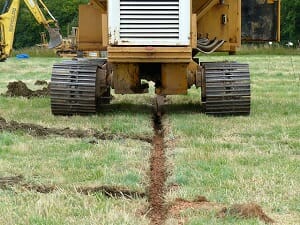
The new drain line

The new drain line

It’s very tidy, isn’t it?  Into this groove, is laid a drainage pipe, which collects all the water from the old field drains and surface water which seeps down, allowing us to keep the site in a reasonable condition even through periods of heavy rainfall.

The work is some distance from any burial areas, and should be done by the end of this week, leaving just a little tidying to do – by us and by nature, with earth settling and grass recovering.  Do let us know if you have any queries or concerns.

Big Butterfly Count

A note to remind everyone that tomorrow, 17 July, is the Big Butterfly Count – an initiative of Butterfly Conservation to monitor how our butterfly numbers are doing across the land.  Do have a look at the website : Big Butterfly Count.  It takes just 15 minutes of your day.  Find somewhere to be, and sit quietly, calmly, enjoying the beauty of nature, and count what you see – then go online and submit your findings.  We’ll be doing it at Sun Rising throughout the day if you’d like to join us, but your own garden, or green space nearby, equally important!

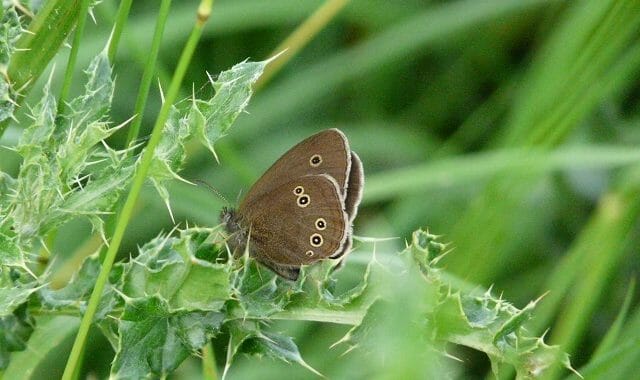
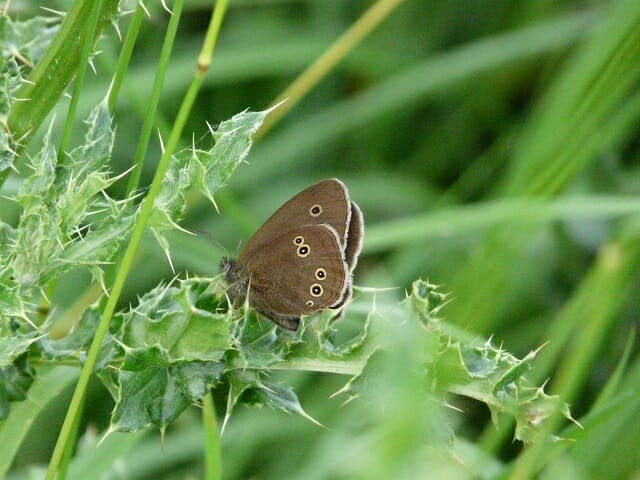
Ringlet Butterfly

Ringlet Butterfly


Double Darts and Other Wonders

While we have regular monthly moth surveys, on 27 June we held our first moth survey night open to all, led by Warwickshire county moth recorder David Brown.  With a good handful of families with loved ones laid to rest at Sun Rising, and another handful of regular mothers (that’s moth-ers), on the most perfectly warm and still summer night, the prospects looked good.  In fact, the results were outstanding, with over 70 species of large moth recorded, and many micromoths as well.

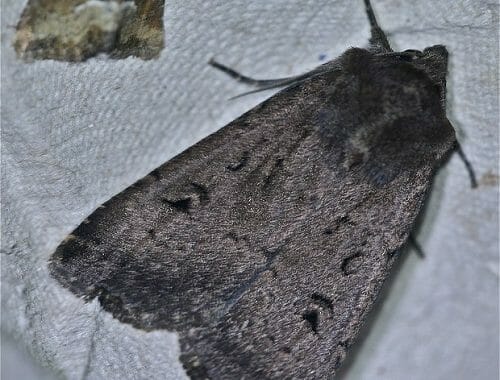
Perhaps the most exciting was the sighting of a double dart moth (Graphiphora augur), a moth that is struggling to maintain its presence in South Warwickshire.  With a sense of success, having found one double dart in a trap by the pond, there were half a dozen more at the trap in the NE corner of the site.  This picture is a little fuzzy, but it was taken on the night – many thanks to Scott, the mother and photographer.

Double Dart Moth

Double Dart Moth

At one of our regular moth survey nights ten days later, over 125 species were counted by Alan Prior and his team – many of which were not found at that previous event, and including two double darts.  This, I believe, brings our total species count of moths seen at Sun Rising to the fine total of 201, some of which haven’t been recorded in the area for many decades.  It’s a good start for a fledgling nature reserve and less than a year of serious moth records.  Thank you to all our wonderful surveyors!

Now, if I could only find someone to be as fastidious and knowledgeable about flies and beetles and spiders …

Lapwing

The sound of lapwings is often heard at Sun Rising – a sound well worth listening out for (a YouTube clip of the sound can be found here : https://www.youtube.com/watch?v=Te10HfbBycw).  We have an idea of where they are nesting, some years it is very close and others it is a little further away.  Their flight is as extraordinary as their song.

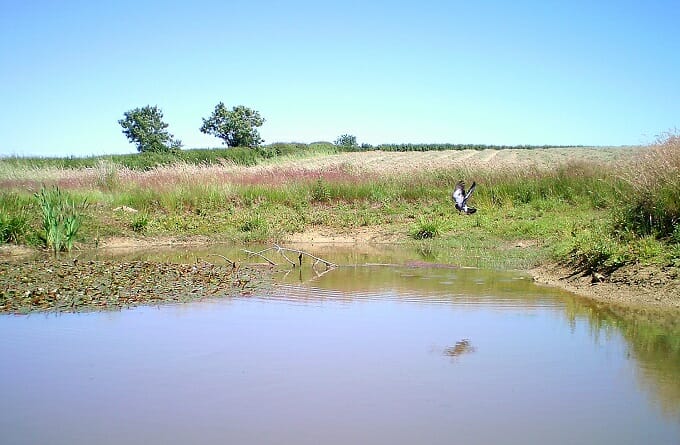
In this photo we caught one as it dived towards the pond.  It’s a poor quality picture, but you can just make it out, with its reflection in the water below.  Just beautiful.

Lapwing over the Pond with the Mown Grassland Behind

Lapwing over the Pond with the Mown Grassland Behind

In this picture you can also see that we have mown the grassland at Sun Rising now, taking the bales off this week.  The site always looks a little awkward at this time, like a shorn sheep, but with a little rain it will green up and start to grow again.  We are also starting the long summer process of tidying up burial areas where there is little ecological biodiversity.  With the cutting of the hay comes the beginning of harvest …

Dragonflies

The pond is a delight at the moment, with rushes and sedges, pondweed, cuckoo flowers and water mint.  There are a few irises coming through, the first of what may be many in the future, and on the bank the oxeye daisies, clovers, knapweed and other wildflowers are coming into bloom.  It won’t be long before the willowherb is in flower as well.  Countless little insects are flying over the surface of the water, and swallows are diving down, just touching the water, with wonderful grace.

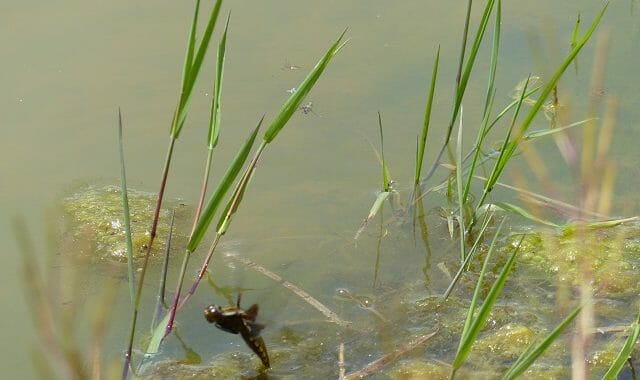
Broadbodied Chaser laying Eggs

Broadbodied Chaser laying Eggs

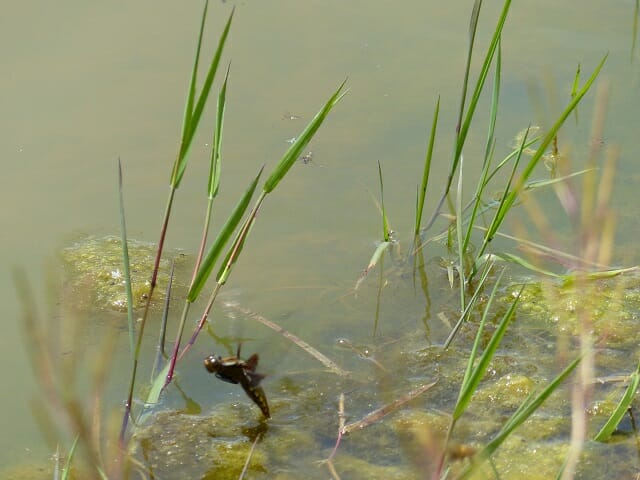
This is a female broadbodied chaser dragonfly that has been laying her eggs.  While the females are a bright sunshine yellow, the males are a brilliant sky blue.  We’ve seen a fair few around the pond, while the females seem to roam further at Sun Rising, coming up into the new woodland.

Theo

Little Theo Monk was buried at Sun Rising in 2008, with immense sadness and dignity – his energy and bounce are still profoundly missed.  As part of her own journey, his lovely mum Anna has put together a beautiful set of photographs – from the funeral to spring 2015 – of his spot in the meadow, his memorial tree, and other Sun Rising moments.  She has put the photos on Facebook and kindly suggested we share it here with you. https://www.facebook.com/anna.kingsley.146/media_set?set=a.356160664590548.1073741845.100005898513556&type=1&l=4dbd5e5e74